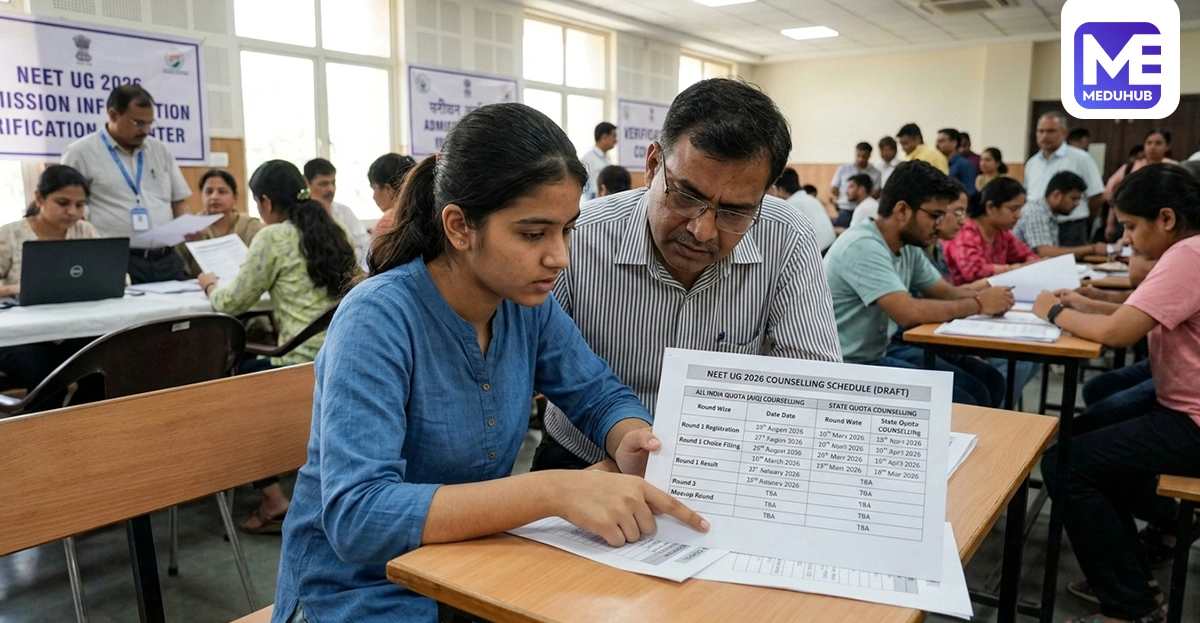
In a significant development ahead of the NEET-UG exam scheduled for May 3, the National Medical Commission (NMC) has proposed a change in the qualifying criteria for undergraduate medical admissions. NEET, which is India’s main entrance exam for medical courses, is taken by lakhs of students every year, making this proposed change important for a large number of aspirants.
The commission is considering replacing the current percentile-based system with a percentage-based cutoff. The proposed move is aimed at ensuring better academic standards and improving the quality of students entering medical education in India.
At present, NEET-UG results are calculated using a percentile system. This means students are ranked based on how they perform compared to others. For example, if a student scores in the 90th percentile, they have performed better than 90% of the candidates.
While this method helps in ranking students, it does not always reflect their actual marks or knowledge level. In some cases, students with relatively low marks may still qualify if the overall performance of candidates is weak in that year.
The NMC has suggested replacing the percentile system with a fixed percentage cutoff. This means students will need to secure a minimum percentage of marks to qualify for medical admissions, regardless of how others perform.
For example, instead of depending on percentile ranks, a student may need to score a certain percentage like 50% or more to become eligible. This system is expected to bring more clarity and consistency in the admission process.
The main goal of this proposal is to ensure that only students with a strong academic foundation enter medical colleges. Moreover, experts believe that the current system sometimes allows students with lower scores to qualify, which may affect the quality of future healthcare professionals.
A percentage-based system sets a clear standard. It ensures that all qualifying students meet a minimum level of knowledge and preparation, which is important in a demanding field like medicine.
This change could make the system easier to understand for students and parents. Instead of worrying about relative performance and percentiles, students can focus on achieving a specific score.
It may also reduce confusion during counseling and admissions, as cutoffs will be more predictable and transparent.
However, some experts have raised concerns about this shift. A fixed percentage cutoff might make it harder for students in tougher exam years, where question papers are more difficult.
There is also a possibility that fewer students may qualify if the cutoff is set too high. This could impact seat filling in some colleges, especially in rural or less popular institutions.
The proposal is still under discussion and has not been officially implemented yet. The NMC is likely to consult education experts, medical institutions, and other stakeholders before making a final decision.
Students preparing for NEET-UG should continue focusing on strong preparation and aim for high scores, as any new system will still require solid performance.
The proposed shift from percentile to percentage cutoff in NEET-UG marks a significant step toward improving medical education standards in India. While it offers greater transparency and fairness, careful planning will be needed to balance difficulty levels and ensure equal opportunities for all students.