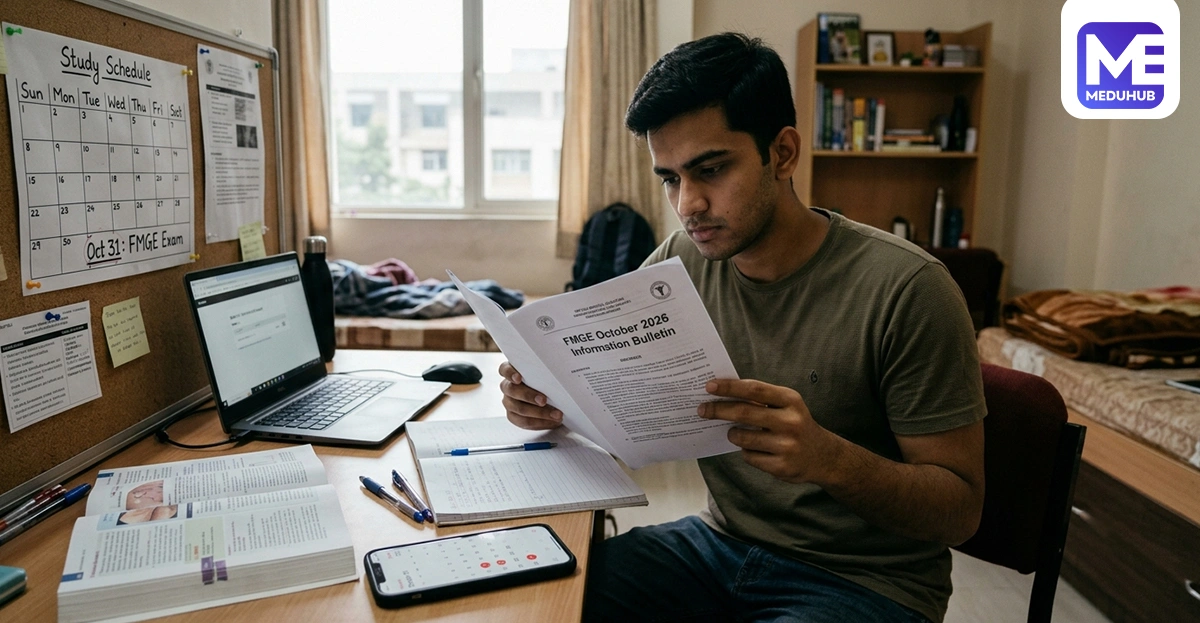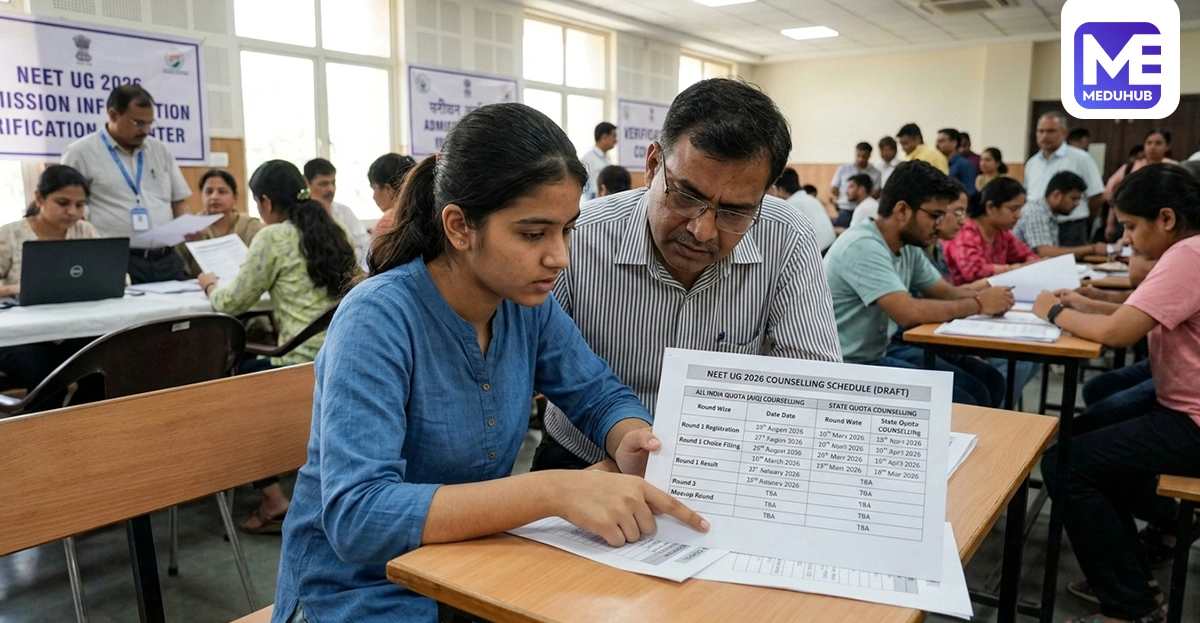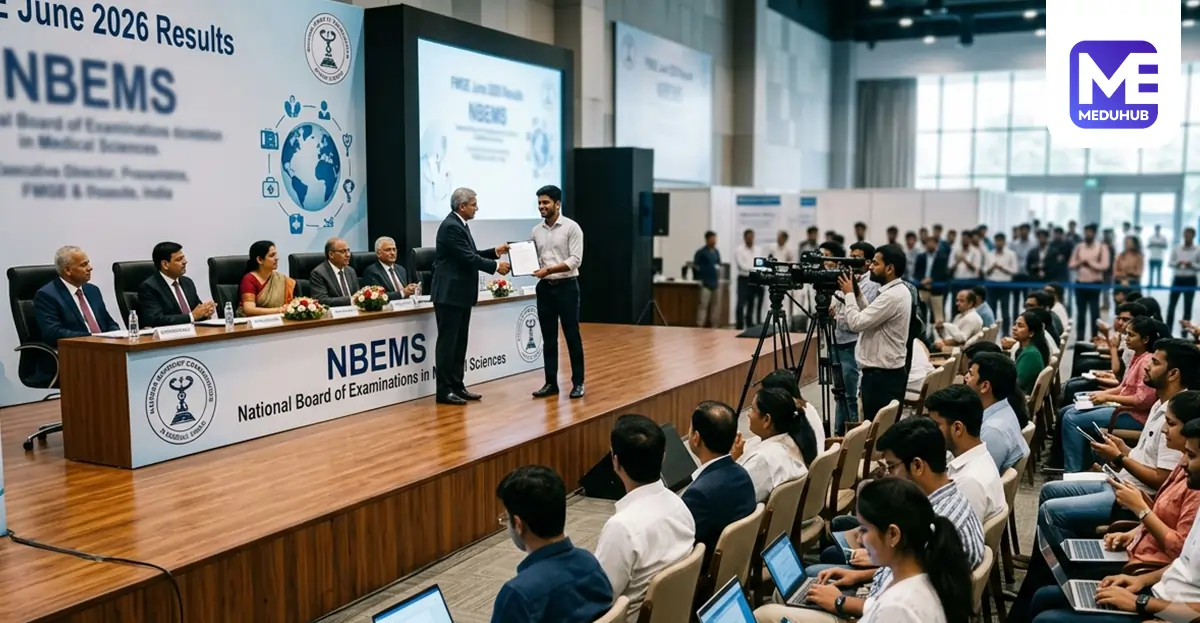
Every year, thousands of Indian students who complete their MBBS abroad reach the same crossroads: which licensing exam comes next? The USMLE vs FMGE question is usually the first one aspiring doctors face, and PLAB soon joins the conversation once the UK enters the picture. Each exam leads somewhere different: a different country, a different regulator, and a very different cost and timeline. FMGE opens the door to practising in India (our FMGE 2026 guide covers eligibility and dates in full). USMLE is the route into US residency and licensure. PLAB gets you onto the UK's NHS register through the GMC. Here's how each one actually works, and how to decide which path fits you.
FMGE (Foreign Medical Graduate Examination) is conducted twice a year: June and December, by the National Board of Examinations in Medical Sciences (NBEMS). It's a screening test for Indian citizens and OCI cardholders who completed their MBBS at a university listed in the World Directory of Medical Schools; passing it is what lets you register with the National Medical Commission (NMC) or a State Medical Council to practise in India.
The exam is 300 MCQs split into two parts of 150 marks each, computer-based, with no negative marking. You need 150/300 (50%) to qualify, and that bar stays the same across every category. There's no age limit and no cap on attempts, which helps, because pass rates have historically stayed low, commonly in the 15–25% range per session. It is, however, by far the cheapest of the three exams: the application fee runs around ₹7,000 per attempt, plus whatever you spend on coaching or study material. Our guide on cracking FMGE in your first attempt breaks down a full prep strategy.
If you're researching USMLE preparation India options, start with the structure: the exam itself breaks into three steps, Step 1, Step 2 CK (Clinical Knowledge), and Step 3, co-sponsored by the NBME and the Federation of State Medical Boards. For international medical graduates, passing Step 1 and Step 2 CK, along with an ECFMG Pathway that now includes the OET Medicine language test and full credential verification, earns you ECFMG Certification, the prerequisite for entering the residency Match through ERAS. Step 3 comes later, usually during residency, once certification is finalised.
One recent change worth knowing: as of January 2026, IMG registration for Step 1 and Step 2 CK moved from ECFMG to the FSMB's own portal, while MyIntealth now handles account setup and certification applications. Coaching hubs in India, Delhi, Hyderabad, and Bengaluru among them, typically charge ₹1.5–4 lakh for structured prep. Exam fees alone run roughly ₹3.5–4.5 lakh across all three steps once international surcharges are added, and the realistic all-in cost, including ECFMG certification, Step 3 travel, and the Match process, is commonly cited between ₹15–25 lakh. Most Indian students budget 3–5 years from the start of preparation to their first day of residency.
If you're looking for a PLAB exam guide, here's the short version: PLAB (Professional and Linguistic Assessments Board) is run by the UK's General Medical Council for international graduates who want GMC registration. It has two parts: PLAB 1, a written MCQ paper you can sit in India, and PLAB 2, a hands-on OSCE held only in Manchester. You'll also need IELTS Academic (7.5 overall, 7.0 in every section) or an equivalent OET score.
As of April 2026, PLAB 1 costs about £283 and PLAB 2 about £1,036; factoring in IELTS/OET, travel, visa, and accommodation for PLAB 2, most candidates spend ₹4–7 lakh end-to-end. Each part allows four attempts (a fifth only with evidence of additional clinical training), and PLAB 1 pass rates typically run 65–75%. Since 2024, PLAB's content has been aligned with the UK Medical Licensing Assessment (UKMLA), though candidates still book and sit it under the PLAB name for now. Clear both parts and you can register with the GMC and start working in the NHS, usually within 12–18 months of starting the process, though unlike FMGE, that registration is UK-specific and doesn't carry back to India without separately re-registering with the NMC.
Here's how the three stack up side by side:
There's no single right answer when it comes to practicing medicine abroad; it depends on where you want to build your career and how much time and money you can put in.
Whichever way you're weighing your MBBS doctor abroad options, it's worth knowing these exams don't block each other out since eligibility for each is assessed independently: some students do prepare for more than one, though most focus on a single exam at a time to manage cost and study load. And if FMGE is part of your planning, keep an eye on how India's licensing system evolves: NExT is expected to eventually reshape it, so our FMGE vs NExT breakdown is worth a read.
There's no universal winner in the USMLE vs FMGE vs PLAB comparison; only the path that fits your goals, timeline, and budget. FMGE is the fastest, most affordable way back into practice if India is where you see your career. USMLE demands the biggest investment of time and money but opens the door to the world's largest residency system. PLAB sits in between: a realistic, comparatively quicker entry into the NHS. Whichever direction you choose, structured preparation matters more than which exam you pick; Meduhub's FMGE, PLAB, and USMLE guidance programs are built to help you prepare with a plan instead of guesswork.
Yes: they're independent exams with separate eligibility rules, so some students do prepare for more than one. That said, most focus on a single exam at a time to manage cost and study load effectively.
“Easiest” depends on your strengths. FMGE covers the broadest MBBS syllabus and has historically had lower pass rates; PLAB 1 tends to have a comparatively higher pass rate; USMLE Step 1 is pass/fail and rigorous, but well-supported by structured question banks and prep resources.
NExT (National Exit Test) is expected to eventually unify India's licensing and PG entrance exams, but its rollout for foreign medical graduates specifically is still evolving. Our FMGE vs NExT guide tracks the differences, it's worth checking the NMC website for the latest official timeline too.
No. USMLE and PLAB lead to registration in the US and UK respectively, not India, so NEET-PG only comes into play if you're planning postgraduate study in India.
FMGE, by a wide margin. The application fee is roughly ₹7,000 per attempt, compared to several lakhs of rupees for USMLE and PLAB once coaching, travel, and registration costs are factored in.