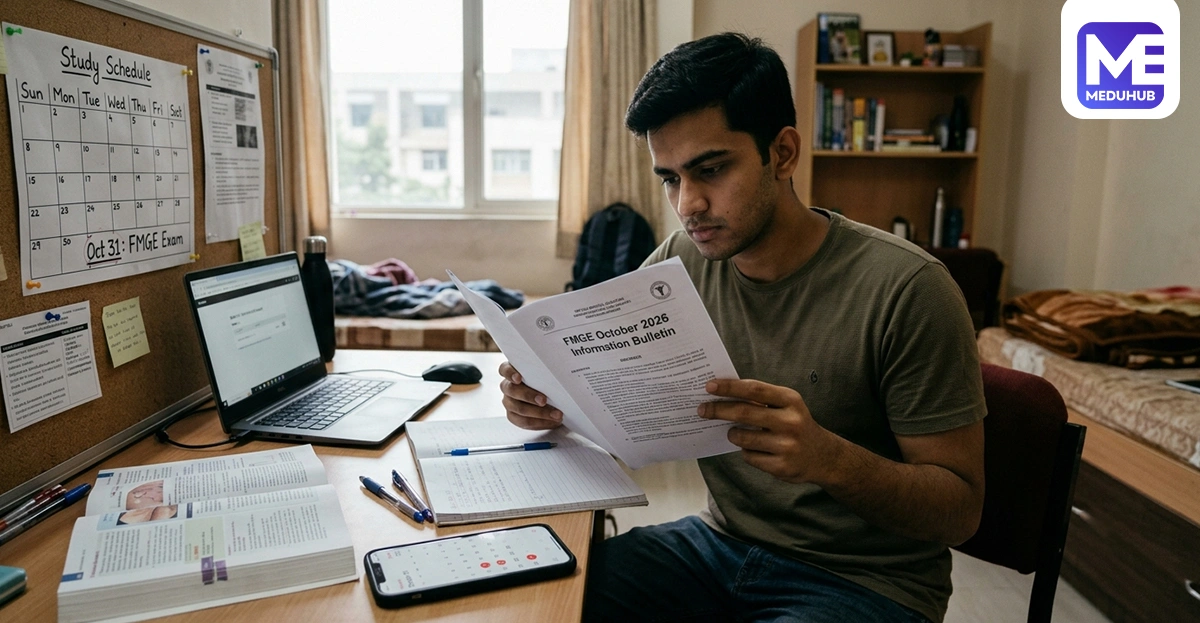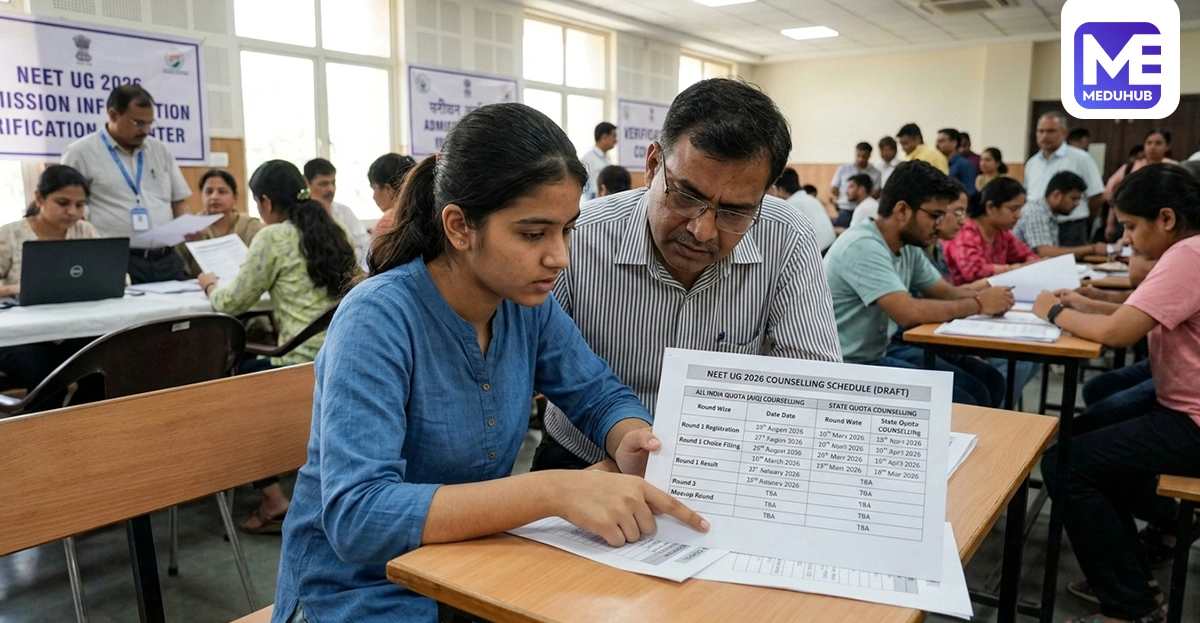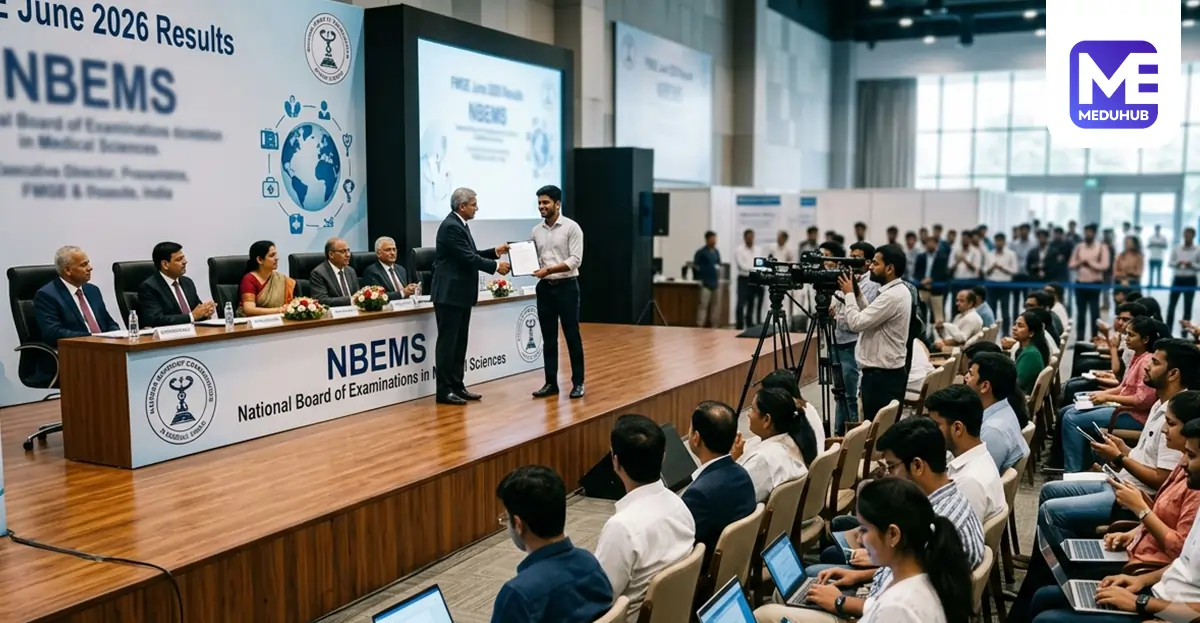
Every year, tens of thousands of Indian medical graduates who completed their MBBS abroad sit for the Foreign Medical Graduate Examination (FMGE), and most of them walk away disappointed. Recent National Board data show pass rates hovering between 18% and 24% per session, meaning most aspirants need more than a stack of PDFs and a WhatsApp study group to clear it. This is exactly where FMGE mentorship makes the real difference. Instead of guessing which topics matter or working through the entire FMGE exam pattern alone, a structured, mentor-led approach gives aspirants a clear roadmap, regular feedback, and someone accountable for their progress three things self-directed study rarely provides.
FMGE is a single-paper, 300-question, multiple-choice screening test covering pre-clinical, para-clinical, and clinical subjects from the full MBBS curriculum. It's conducted twice a year, usually in June and December, by the National Board of Examinations in Medical Sciences (NBEMS), under regulations issued by the National Medical Commission. Candidates need to score 150 out of 300, or 50%, to qualify for registration.
That round number hides how difficult the exam is in practice. NBEMS-published results for the June 2025 session showed a pass rate of roughly 18.6%, and the December 2025 session improved only slightly, to around 23.4%. In plain terms, three out of every four candidates who sit for FMGE do not clear it on that attempt. Add a curriculum gap: many aspirants trained abroad have limited exposure to India-specific public health topics under Preventive & Social Medicine, and it's easy to see why so many well-prepared students still struggle, a pattern explored in more detail in common challenges FMGE aspirants face. None of this comes down to intelligence; it comes down to having a plan, which is exactly the gap FMGE mentorship is built to close.
Most FMGE aspirants don't fail. They didn't study; they fail because they studied the wrong things for too long. Without anyone reviewing their progress, it's common to spend weeks on subjects that are already strong and barely touch high-yield areas like Pharmacology, Pathology, or Medicine. Questions pile up with no one to answer them quickly, mock test scores get reviewed alone without context, and motivation dips during the long stretch between exam sessions. Generic FMGE coaching that's just a library of recorded lectures doesn't fix it's still self-study, just with better production value. What's actually missing is FMGE mentorship: someone who looks at an individual's performance and adjusts the plan accordingly.
A mentor-led approach flips this dynamic in four concrete ways.
Instead of waiting days for an answer in a crowded forum, aspirants working with a dedicated mentor can get subject-specific doubts cleared directly by faculty who teach that subject: Medicine, Surgery, Obstetrics & Gynaecology, Pharmacology, and the rest of the FMGE syllabus. This removes one of the biggest time-wasters in self-study: getting stuck on a concept for days instead of minutes.
FMGE personal guidance usually starts with a diagnoic a baseline mock test that shows exactly which subjects and question types need work. From there, a mentor can rebalance study hours toward weaker subjects rather than following a generic, one-size-fits-all timetable that assumes every aspirant starts from the same place.
Practice tests only help if someone explains why an answer was wrong and how to approach similar questions next time. Regular mock tests reviewed with a mentor turn every attempt into a feedback loop, part of why structured guidance shows up so often in accounts of aspirants who clear FMGE on their first attempt.
FMGE preparation often stretches across many months, and motivation naturally dips somewhere in the middle. A mentor who checks in on progress, flags a slipping study plan, and resets targets after a rough mock test gives aspirants a reason to stay consistent something a self-paced course or a stack of question banks can't replicate.
Not every platform that advertises FMGE coaching offers real FMGE mentorship. Before committing, it's worth checking for a few specifics:
Format matters less than most aspirants expect; what matters is whether you're getting real FMGE personal guidance and faculty who understand what actually drives FMGE success season after season, not just pre-recorded content. For a closer look at how the two approaches compare, see online vs offline FMGE coaching.
FMGE rewards preparation that's structured, personalized, and consistently reviewed exactly what self-study struggles to provide on its own. With pass rates still sitting well below 30% across recent sessions, aspirants studying without any external feedback are competing against long odds. Personal FMGE mentorship doesn't guarantee a pass, but it closes the gaps that generic preparation leaves open: unclear weak areas, unanswered doubts, and no one tracking whether the plan is actually working. If you're preparing for an upcoming session, it's worth exploring Meduhub's FMGE faculty and mentorship programs before you lock in a study plan.
It's personalized, one-on-one academic support, usually a customized study plan, doubt-clearing with subject experts, and reviewed mock tests as opposed to generic, pre-recorded coaching that treats every aspirant the same way.
It doesn't guarantee a pass, but the mechanisms it provides targeted revision, timely feedback, and accountability directly address the reasons most aspirants struggle: wasted study time and unresolved weak areas.
Yes, as long as the mentor is genuinely reviewing your progress. Format matters less than whether you're getting subject-specific feedback and a plan that adjusts to your performance.
Often, a mentor is most useful after a failed attempt; reviewing the scorecard to see exactly where marks were lost is far more effective than repeating the same plan and hoping for a different result.
As early as possible in your preparation. The earlier a mentor can assess your baseline, the more time you have to correct course before the exam.