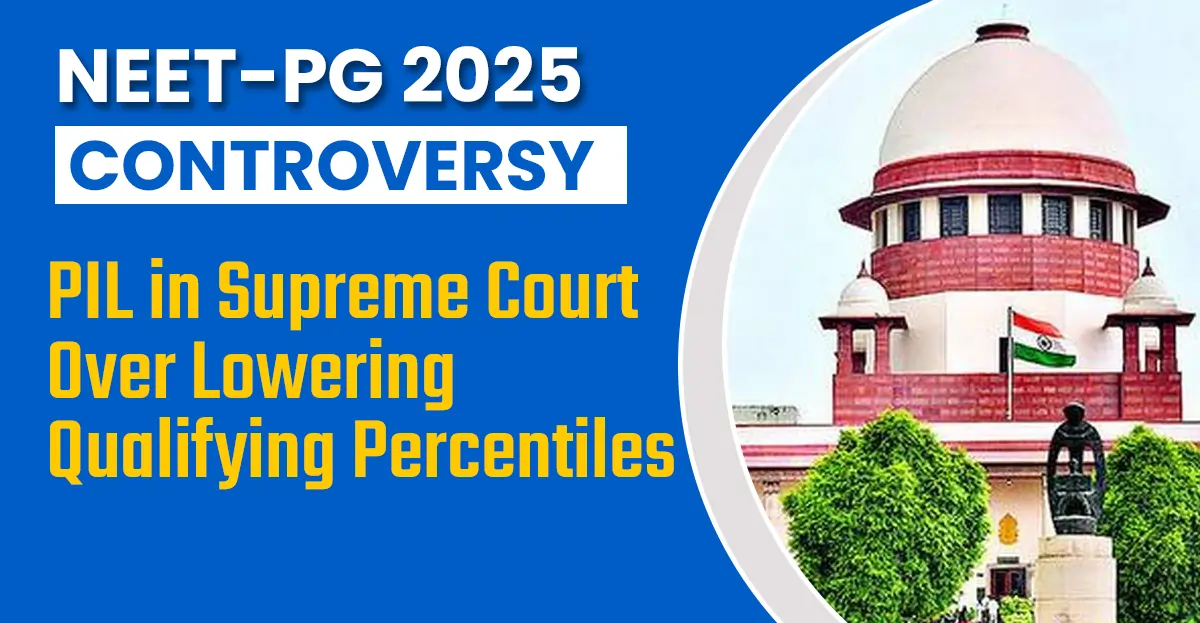
New Delhi: A storm has erupted around this year’s NEET-PG results after a public interest litigation reached the Supreme Court of India. At the center of the dispute is a decision by the National Board of Examinations in Medical Sciences (NBEMS) to sharply lower the qualifying percentiles for NEET-PG 2025‑26 counselling and admissions.
On February 4, a bench of Justice Pamidighantam Sri Narasimha and Justice Alok Aradhe took up the case and issued notices to the Government of India, NBEMS, the National Medical Commission, and others involved. The court has asked these parties to file their responses and is expected to hear the matter again later this week.
In mid‑January, NBEMS issued a directive reducing the standard cut‑off scores used to determine who is eligible for postgraduate medical counselling. Under the revised system:
Because NEET-PG uses negative marking, the zero percentile for some categories translates to eligibility at scores as low as minus 40 out of a total of 800 marks.
Officials say the move was driven by the reality that more than 18,000 postgraduate seats remained vacant after earlier rounds of counselling, and lowering the threshold was intended to broaden eligibility to fill those openings.
Doctors and petitioners argue that changing eligibility years after the examination and after counselling rounds disrupts fairness and undermines the integrity of medical education. Their plea claims the change violates long‑standing legal principles and constitutional protections such as Articles 14 and 21.
Critics from within the medical community have described this reduction as “unprecedented and illogical,” warning it could jeopardize future healthcare quality if students with very low or negative scores become eligible for postgraduate training.
The petitioners want the Supreme Court to annul the NBEMS notification and restore the earlier qualifying standards that defined eligibility based on merit.
The Supreme Court has set a schedule for hearings and will examine the arguments from both sides. While no final order has been passed yet, the hearing’s outcome could shape how NEET-PG counselling and admissions proceed this year and influence future policies on eligibility criteria.
The controversy highlights the tension between filling vacant medical seats and preserving rigorous academic standards in a highly competitive national exam that determines careers in specialist medical fields.